

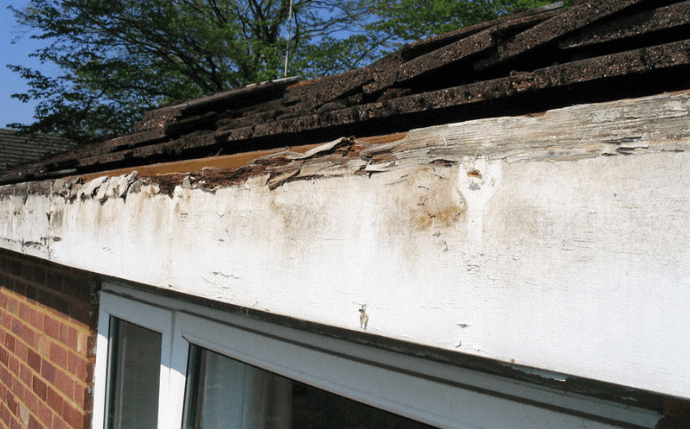
Quick Summary
- Sagging gutters and standing water aren’t just cosmetic problems — they’re the first sign of fascia board rot that can ultimately threaten your home’s foundation.
- New Jersey’s freeze/thaw cycles accelerate this damage faster than most homeowners realize, turning a minor pitch issue into a major structural repair.
- Knowing the five warning signs early is the difference between a straightforward fix and a costly, invasive restoration.
You notice it on a rainy afternoon. Your gutters are full of standing water — or worse, they’re visibly pulling away from the roofline. You tell yourself it’s a minor issue. You’ll deal with it later.
Here’s the truth: by the time you can see the problem, the damage behind your gutters has likely been building for months. And in New Jersey, where heavy spring rains and brutal winter freeze/thaw cycles are the norm, “later” can mean the difference between a straightforward repair and a foundation-threatening water damage situation.
Let’s walk through exactly what’s happening — and what to do about it.
Why Gutter Pitch Matters More Than You Think
Think of your gutter system like a highway for water. When it’s properly engineered, every drop of rain that hits your roof gets channeled safely away from your home’s foundation. The key to that system working is pitch — the slight downward slope built into every run of gutter.
The standard is simple: gutters should slope approximately ¼ inch for every 10 feet toward the downspout. That’s enough to keep water moving without being visible to the naked eye. When that slope is off — whether from improper installation, age, or sagging — water stops moving. It pools. And that’s when the real trouble starts.
Standing water in gutters isn’t just stagnant. It’s destructive.
How Standing Water Destroys Your Fascia Board
Your fascia board is the long piece of wood that runs along the edge of your roofline, directly behind your gutters. It’s what the gutters are actually mounted to. Most homeowners never think about it — until it starts to rot.
Here’s the mechanism that most contractors won’t take the time to explain.
When water pools in an improperly pitched gutter, it sits against the back of the gutter channel, pressed right against the fascia. Over time, that moisture seeps behind the gutter lip and into the wood. In New Jersey’s winters, that trapped moisture freezes. When water freezes, it expands — and that expansion creates micro-fractures in the wood fibers.
Each freeze/thaw cycle widens those fractures a little more. The gutter begins to pull slightly away from the fascia. That gap exposes raw, untreated wood to direct moisture. The wood softens. Rot sets in. And now you don’t just have a pitch problem — you have a structural problem.
Left unaddressed, rotted fascia can compromise the drip edge, invite pest intrusion, and allow water to migrate into your roof deck, walls, and eventually your foundation.
5 Signs Your Gutters Are Failing Your Fascia Right Now
You don’t need to climb a ladder to spot early warning signs. Here’s what to look for from the ground:
- Visible sagging or dipping in the gutter run — a clear sign the pitch has shifted or the fascia it’s mounted to has softened
- Water stains or streaking on the siding below the gutter line — water is overflowing where it shouldn’t be
- Paint peeling or bubbling on the fascia board or soffit — moisture is working its way into the wood
- Gutters pulling away from the roofline, even slightly — the wood no longer has the structural integrity to hold the hardware
- Standing water visible after rain — if you can see water sitting in your gutters 24+ hours after a storm, your pitch is wrong
If you’re seeing two or more of these, the damage behind the gutter is almost certainly more advanced than what’s visible on the surface.
New Jersey Homes Are Especially Vulnerable
This isn’t just a general home maintenance issue. NJ’s climate creates a uniquely aggressive environment for this type of damage.
Our spring seasons bring some of the heaviest sustained rainfall on the East Coast. Our winters cycle between freezing and thawing — sometimes multiple times in a single week. Older neighborhoods throughout Morris, Sussex, Warren, and Hunterdon Counties are filled with homes built decades ago, many with original wood fascia that was never designed to withstand modern moisture loads without proper gutter protection.
If your home was built before the 1990s, the fascia behind your gutters may already be compromised — even if it looks fine from the street. This is exactly why a proper diagnostic inspection matters so much before any repair work begins.
Not sure what you’re dealing with? Our team can help you determine if you need a gutter repair or full replacement — with honest, transparent guidance and no pressure.
Can You Just Replace the Fascia Without Touching the Gutters?
This is one of the most common questions we hear — and the answer is almost always no.
If the fascia rotted because of a pitch problem, replacing the wood without correcting the slope is like patching a leaky roof without fixing the broken shingle. The water will find the same path. The new wood will rot on the same timeline.
A proper fix addresses both issues together: the rotted fascia is removed and replaced with premium material, and the gutters are installing properly pitched seamless gutters reinstalled with the correct slope, the right hardware, and a drip edge that actually protects the wood underneath.
Anything short of that is a temporary patch on a permanent problem.
Why DIY Isn’t the Answer Here
We understand the instinct to climb up and take a look. But fascia replacement and gutter re-pitching aren’t weekend projects — they’re precision work done at height, and the stakes are high.
Getting the slope wrong by even a fraction means the water problem persists. Using the wrong fasteners means the gutters pull away again within a season. And beyond the technical risk, ladder injuries are one of the leading causes of serious home-improvement accidents every year.
The potential risks simply do not outweigh the savings. This is work that needs to be done once, done right, and done with top-quality materials that carry a real warranty.
Conclusion & Next Steps
That sagging gutter isn’t a cosmetic issue — it’s your home telling you something important. The good news is that when you catch fascia board rot and gutter pitch failure early, it’s a very solvable problem. The key is acting before the damage migrates deeper into your roof structure or reaches your foundation.
At Just Gutters, LLC, we’ve helped homeowners across New Jersey diagnose and permanently fix exactly this kind of damage. As a family-owned gutter company, we believe in honesty, integrity, and transparency — that means we’ll tell you exactly what we find, explain every step of the repair, and back our work with top-quality materials built to last.
Your home’s gutters are in good hands with us.
Don’t wait until the damage goes deeper. Call or text us today at +1 201-331-9454 for a FREE estimate — and let’s safeguard your foundation from water damage together.
Frequently Asked Questions
What happens if water sits in gutters because of bad pitch?
Standing water caused by improper pitch presses against the fascia board and seeps into the wood. In colder climates like New Jersey, that moisture freezes and thaws repeatedly, creating micro-fractures that gradually pull the gutter away from the roofline and accelerate wood rot. Over time, this can compromise your roof deck, siding, and foundation drainage.
How can you tell if the wood behind your gutters is rotting?
From the ground, look for gutters pulling away from the roofline, paint peeling or bubbling on the fascia or soffit, water stains streaking down your siding, and visible sagging in the gutter run. A professional inspection will probe the wood directly — soft or spongy fascia is a definitive sign of rot, even when it looks intact from a distance.
Can you replace the rotted fascia board without removing the gutters?
In most cases, no — and even when it’s physically possible, it’s not advisable. If the fascia rotted due to a pitch problem, replacing the wood without correcting the slope means the new board will face the same moisture exposure. A proper repair addresses both the fascia replacement and the gutter re-pitch at the same time, using premium materials and correct hardware to prevent recurrence.
 The Best Aluminum Gutter Thickness for Heavy Snow Loads (And Why It Matters More Than You Think)