

Quick Summary
- Standing water in clogged gutters doesn’t just overflow — it uses capillary action to silently wick upward behind your drip edge, soaking the backside of your fascia board long before you see a single crack or paint bubble.
- The early warning signs of fascia rot are subtle: a slight gutter sag, a faint water stain on the soffit, or paint that seems to peel “for no reason” — each one is a late-stage signal of damage already in progress.
- For homeowners with older or historic properties in Hackettstown, NJ, catching this early is the difference between a straightforward repair and a full roofline replacement.
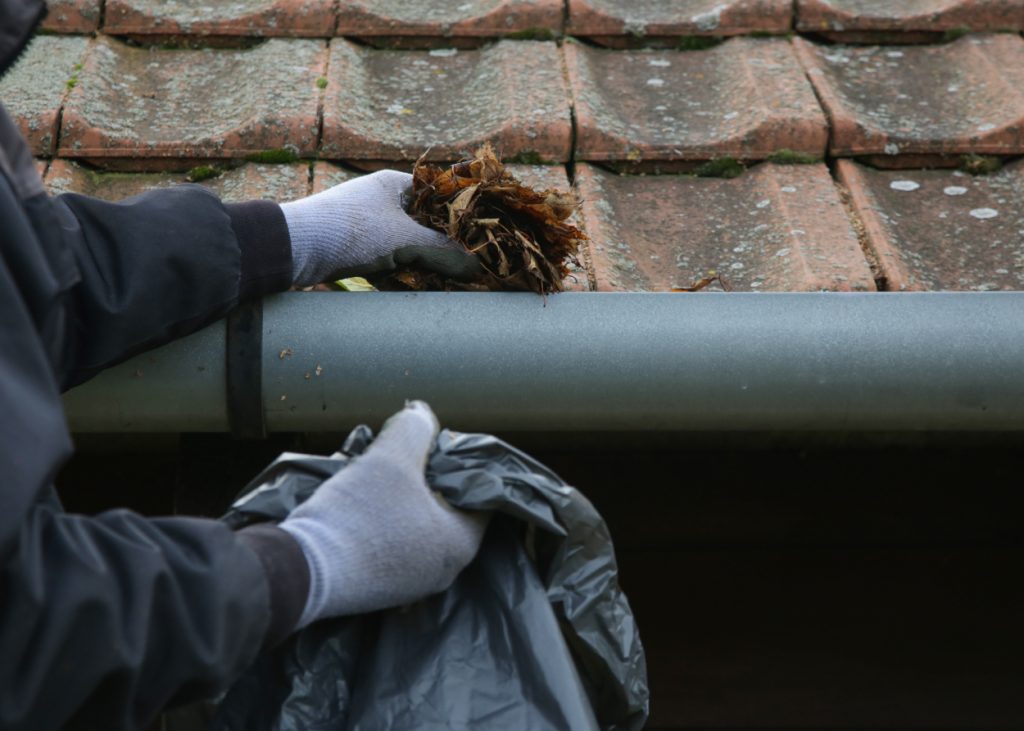
Your gutters look fine from the driveway. No visible overflow. No obvious cracks. But if they’ve been clogged — even seasonally — there’s a good chance your fascia boards are already rotting from the inside out.
That’s not a scare tactic. It’s physics.
Why Standing Water Doesn’t Just Sit There
Most homeowners picture clogged gutters as a simple overflow problem. Water fills up, spills over the edge, and drips down the side of the house. That’s part of it — but it’s not the dangerous part.
The real threat is what the water does before it overflows.
Capillary action is the same force that pulls water up through a paper towel when you touch the corner of a puddle. Wood fibers, the narrow gap between your gutter and the drip edge, and the compressed debris sitting in a clogged channel all create the exact conditions for this phenomenon to occur.
In plain terms: water defies gravity. It wicks upward and inward, seeping behind the drip edge and saturating the back face of your fascia board — the side you can’t see without removing the gutter entirely.
That surface stays wet. It doesn’t dry out between rain events. And wet wood, left in the dark, does exactly one thing over time.
It rots.
The Freeze-Thaw Problem Is Worse in New Jersey
If you own an older home along Main Street or Washington Street in Hackettstown, you already know how punishing the seasonal weather cycle can be on wood trim and exterior millwork.
New Jersey winters don’t just freeze — they cycle. Temperatures drop, rise above freezing, then drop again, sometimes within the same week. That rhythm is brutal on a compromised fascia board.
Here’s what happens: debris-packed gutters freeze solid in a cold snap. As temperatures rise, that ice melts, and the water has nowhere to go. It backs up, forces its way under the shingles, and drives deeper into the wood grain. Then it freezes again.
Each freeze-thaw cycle physically expands the wood fibers, accelerating decay and creating micro-fractures that invite fungal growth. What starts as moisture saturation becomes active wood rot within a single winter season in a worst-case scenario.
This is why our specialized gutter inspection method specifically targets the fascia-to-gutter interface on homes with existing wood trim — it’s the most common failure point we find on aging Northern New Jersey properties.
Early Warning Signs: What to Look For Before the Wood Crumbles
The frustrating reality of fascia rot is that by the time it looks bad, it is bad. But there are earlier signals if you know what you’re seeing.
Watch for these before the damage becomes structural:
- Peeling or bubbling paint on the fascia face — not caused by sun exposure, but by moisture pushing outward from a saturated board underneath
- A slight but unexplained gutter sag — this is critical; when fascia wood begins to lose integrity, it loses its grip on the gutter hangers and spikes that hold the system to your roofline
- Water stains or discoloration on the soffit panels — moisture that has migrated past the fascia will begin showing up on the horizontal surface beneath your roofline overhang
- A widening gap between the gutter back and the fascia face — as the wood softens, the gutter pulls slightly away from the board
Each of these is a signal that water infiltration has already been happening for some time. None of them is the start of the problem — they’re the announcement that it’s been progressing quietly.
Visual note for your team: This section pairs well with a cross-section diagram showing capillary action wicking behind the drip edge, and macro photography of early-stage paint bubbling on a fascia face.
From Rot to Structural Failure: How Far Does It Go?
Left unaddressed, fascia rot doesn’t stay contained to the fascia board.
Moisture that has saturated the fascia will migrate inward toward the rafter tails and roof truss ends — the structural framing members that the fascia is designed to protect. Once fungal organisms establish themselves in wet wood, they spread through the grain, and the damage becomes exponentially harder (and more expensive) to remediate.
The pathway from there is well-documented: compromised rafter tails, weakened roof decking at the eaves, and eventually, a pathway for water to enter the attic space itself.
For historic properties with original wood framing, this isn’t a hypothetical — it’s a pattern we see regularly across aging homes in Morris County and Warren County. The high-end gutter materials and installation methods that protect against this kind of infiltration are a fundamentally different category of investment than a standard big-box gutter replacement.
How Professionals Diagnose (and Fix) Hidden Fascia Rot
A proper fascia rot assessment isn’t a visual inspection from the ground. It requires getting hands on the wood.
Our team uses a simple but definitive probe test: a firm push with a screwdriver or awl into the fascia face at the gutter line. Sound wood resists. Rotted wood gives — sometimes dramatically, sometimes with just a soft, spongy depression. The depth and spread of that softness tells us whether we’re dealing with surface decay or structural compromise.
The honest answer on repair vs. replace: If the rot is localized — one section of board, caught early — a section repair with treated wood and proper sealing can be a sound choice. If the damage has spread behind multiple gutter hangers or into the rafter tails, full replacement is the only responsible recommendation.
We don’t upsell. We diagnose, explain exactly what we’re seeing, and give you the straightforward options. That’s the Just Gutters standard — honesty, integrity, and transparency on every job.
Long-Term Prevention: Stop the Cycle Before It Starts
The most effective thing you can do for your fascia boards is eliminate the conditions that allow standing water to accumulate in the first place.
That means:
- Regular, professional gutter cleaning — at a minimum twice a year in New Jersey, before winter and after the heavy leaf fall in October and November
- A properly installed drip edge — this metal flashing creates a physical barrier that directs water away from the fascia face rather than allowing it to wick behind the gutter
- Premium gutter guard systems — not all guards are equal; a properly matched guard for your roofline and tree canopy eliminates the debris load that creates standing water in the first place
If your home has original wood fascia and is more than 20 years old, a proactive inspection is genuinely worth scheduling before the next freeze season. Catching early-stage saturation before rot sets in is a straightforward fix. Catching it after the rafter tails are compromised is a significant structural project.
Conclusion & Next Steps
Fascia board rot from clogged gutters is one of the most preventable forms of structural water damage — and one of the most commonly missed because it hides behind a gutter system that looks perfectly normal from the outside.
The physics of capillary action, the New Jersey freeze-thaw cycle, and the slow migration of moisture through aging wood don’t announce themselves. They work quietly, over months and seasons, until the damage is visible enough to be undeniable.
If your home has older wood trim, a history of gutter clogs, or you’ve noticed any of the early warning signs above, don’t wait for a visible leak to confirm what may already be in progress.
Schedule your free Hackettstown gutter estimate today. Our team will inspect the fascia-to-gutter interface, probe for early-stage rot, and give you a clear, honest picture of what your roofline actually needs — no pressure, no surprises.
Frequently Asked Questions
How long does it take for a fascia board to rot from overflowing, clogged gutters?
There’s no single timeline — it depends on the wood species, the age of the board, and how frequently water wicks behind the gutter. In New Jersey’s climate, with repeated freeze-thaw cycling, we’ve seen significant structural rot develop in a single winter season on older, unprotected wood fascia. On newer pressure-treated boards with intact paint and a proper drip edge, the process is slower but not indefinitely preventable if standing water persists. The short answer: don’t measure it in years. Measure it in seasons.
What does early-stage hidden wood rot look like behind a gutter before the paint peels?
You won’t see it — that’s the defining characteristic of early-stage fascia rot. It begins on the back face of the board, the surface pressed against the rafter tails and hidden behind the gutter. The first visible sign is usually paint that bubbles or peels from the fascia face without an obvious sun or moisture source, or a gutter that begins to pull slightly away from the roofline. By the time the paint is peeling, the wood behind it has already been saturated for some time. The only way to accurately assess early-stage rot is a physical probe inspection at the gutter line — something our team performs as part of every specialized gutter inspection.
Does installing a proper drip edge completely prevent standing water from rotting the fascia board?
A correctly installed drip edge significantly reduces the risk by directing water off the roof deck and away from the fascia face — but it’s not a complete solution on its own. If the gutter is clogged and holding standing water, capillary action can still wick moisture upward past the drip edge at the gutter-to-fascia interface. The drip edge works best as part of a complete system: clean, free-flowing gutters, proper flashing, and — for maximum protection — a quality gutter guard that prevents debris accumulation in the first place.
 Why Steep Roofs in Hackettstown Are an Ice Dam’s Best Friend (And What to Do About It)